
- September 8, 2025
- By: admin
- in: Updates

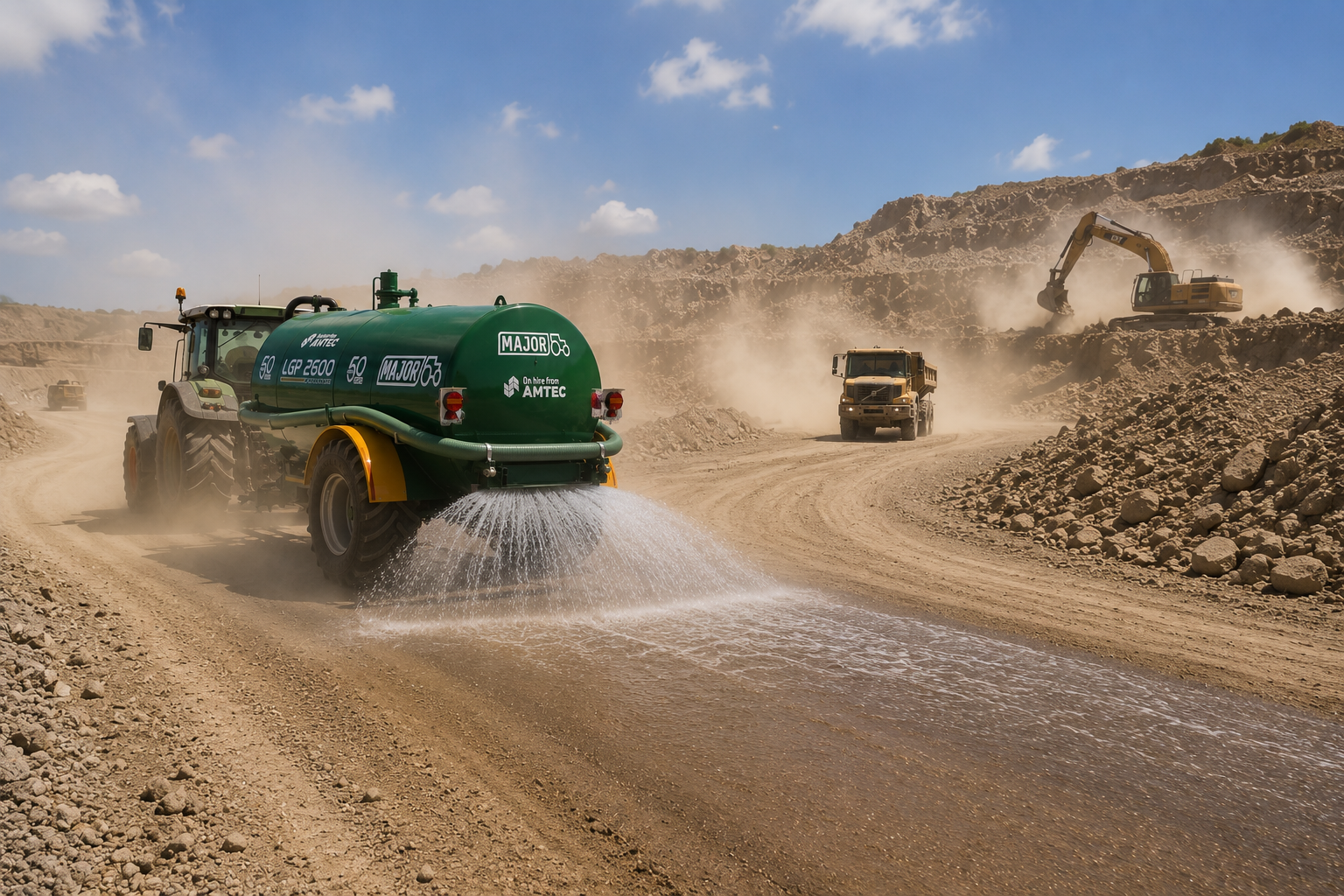
Whether you’re running a construction site, operating a quarry, carrying out demolition work or undertaking large-scale earthworks, controlling dust isn’t just good practice – it’s essential. Effective dust suppression protects workers, safeguards neighbouring communities, improves on-site visibility, and helps businesses meet their legal responsibilities.
Dust is often an inevitable part of many construction projects, but leaving it unmanaged can create problems that are often avoidable. Poor dust control can affect the health of on-site workers, lead to complaints from neighbouring properties, and, in some cases, result in enforcement action that disrupts the project.
Dust suppression is the process of preventing fine particles from becoming airborne during construction activities. The most common approach is to apply water to haul roads, working areas, stockpiles, and demolition zones using a water bowser.
Activities such as excavation, demolition, crushing, quarrying, aggregate handling and even constant vehicle movements can generate significant amounts of airborne dust, particularly during long periods of dry weather. Without effective suppression, these particles can spread well beyond the site boundary.
One of the biggest reasons for controlling dust is to protect the health of everyone working on site. Construction dust can contain harmful particles that are easily inhaled, and prolonged exposure is linked to serious respiratory illnesses, including asthma, COPD, and silicosis.
There is also a legal obligation to manage dust effectively. UK health and safety legislation requires employers to assess and control exposure to hazardous dust, and failure to do so can result in enforcement notices, fines, project delays and damage to reputation. Demonstrating good dust management shows a commitment to worker welfare and professional site management.
Dust doesn’t stop at the site entrance. It can settle on nearby roads, homes, vehicles and agricultural land, leading to complaints from residents and increased scrutiny from local authorities.
Within the site itself, airborne dust reduces visibility around moving machinery and vehicles, increasing the possibility of accidents. It can also find its way into engines, cooling systems and hydraulic components, accelerating wear on expensive equipment and increasing maintenance costs.
Keeping dust under control not only creates a safer working environment but also helps machinery operate more reliably and allows work to continue with fewer interruptions.

For many construction, quarry and civil engineering projects, a water bowser provides one of the simplest and most effective methods of dust suppression. By regularly watering haul roads, working areas, and stockpiles, operators can dramatically reduce airborne dust, improve visibility, and keep the site cleaner.
Hiring a water bowser also gives contractors the flexibility to bring in additional capacity during busy periods or extended spells of dry weather without the capital cost of purchasing specialist equipment.
At AMTEC Hire, we offer a Major 2600 Gallon Water Bowser that’s ideally suited to construction sites, quarries, demolition projects and civil engineering works. Its large capacity allows operators to cover more ground between refills, helping maintain effective dust suppression throughout the working day.
Whether you’re looking to improve site safety, comply with environmental requirements or keep your project running efficiently, our flexible hire options provide a feasible solution for both short and long-term projects.
Dust control isn’t something to think about only when complaints start coming in. It’s part of running a well-managed site. Keeping dust under control helps create a safer working environment, keeps machinery cleaner, improves visibility and shows that your business takes its responsibilities seriously.
If you only need extra capacity during busy periods or dry weather, hiring a water bowser can be a practical solution. It gives you the flexibility to tackle dust when needed, without the cost and commitment of owning a machine.


AMTEC Hire is a subsidiary of AMTEC Smart Farming Solutions a leading supplier of cultivation and planting machinery for the agricultural market.