Power harrows and rotavators are both widely used for soil preparation, but they work very differently. Understanding those differences matters when selecting machinery for agricultural operations, landscaping, or land reinstatement.
Both machines use powered rotating components to work the soil, but the direction of rotation, soil movement and resulting finish can vary considerably.
So which should you choose?
How Does a Power Harrow Work?
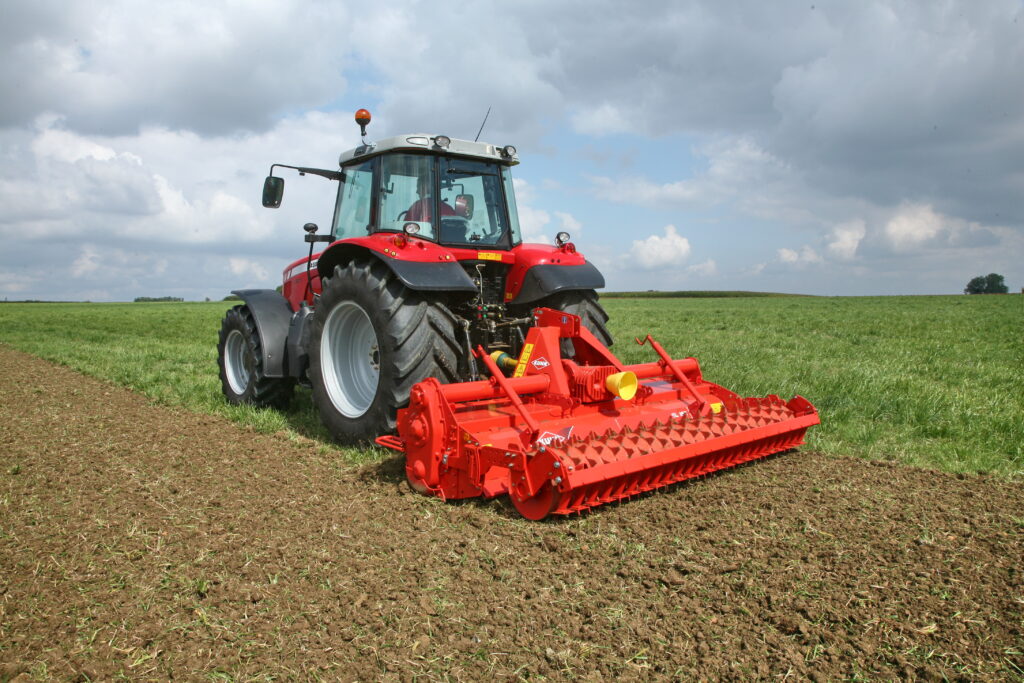
A power harrow uses a series of vertically mounted rotors fitted with tines. These rotate on vertical shafts, working and breaking down the soil without the same degree of vertical soil mixing as a conventional rotavator.
Power harrows are commonly used for secondary cultivation and seedbed preparation, often following ploughing or other primary cultivation operations.
Depending on the soil type, conditions and machine setup, they can produce a relatively level, fine seedbed suitable for drilling or planting.
Many power harrows also incorporate a rear roller to control working depth and consolidate the finished surface.
Advantages of a Power Harrow
- Effective seedbed preparation following primary cultivation.
- Can produce a level, consistent finish.
- Generally maintains more of the existing soil profile than a rotavator.
- Suitable for a range of arable and reseeding operations.
- Rear roller options help control depth and finish.
Power harrows are particularly useful when the objective is to prepare an existing cultivated soil profile for crop establishment.
How Does a Rotavator Work?
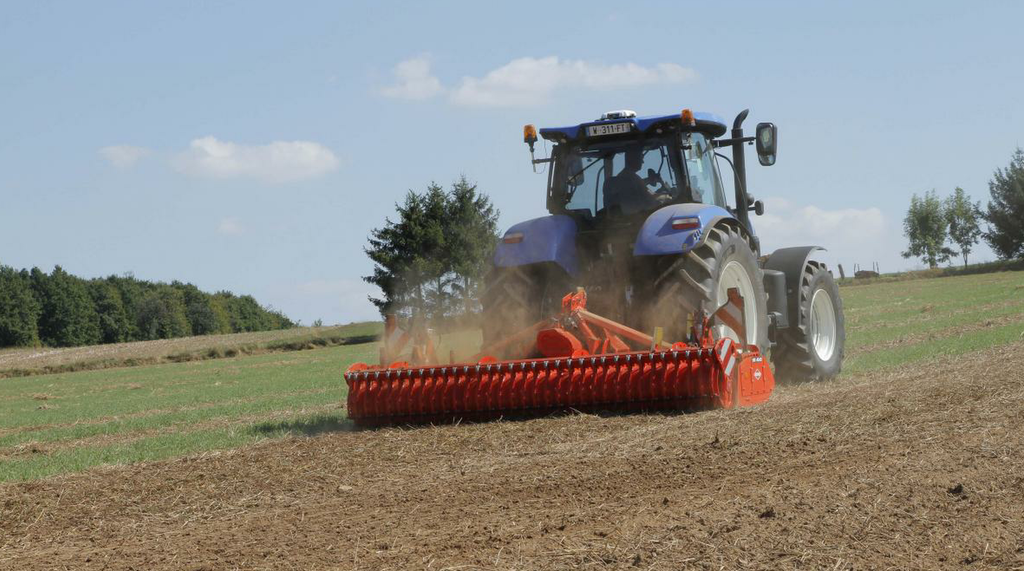
A rotavator uses a horizontally mounted rotor with curved or shaped blades that rotate through the soil.
Unlike a power harrow, the rotor actively lifts, cuts and mixes soil as it works.
This makes rotavators particularly useful where more intensive soil mixing is required.
Applications can include preparing ground for landscaping, incorporating vegetation or organic material, renovating existing surfaces and creating a workable soil layer.
The degree of soil breakdown depends on factors including rotor speed, forward speed, working depth and soil moisture.
Advantages of a Rotavator
- Intensive soil breakdown and mixing.
- Useful for incorporating vegetation and suitable surface material.
- Can help prepare previously unmanaged ground.
- Suitable for certain landscaping and land reinstatement operations.
- Can produce a fine tilth in appropriate conditions.
However, repeated or aggressive rotavating can damage soil structure, particularly in unsuitable conditions. Working wet soil may cause smearing or compaction, and excessive cultivation can leave the surface vulnerable to capping.
Power Harrow vs Rotavator: Key Differences
| Consideration | Power Harrow | Rotavator |
| Rotor arrangement | Vertical rotors | Horizontal rotor |
| Main action | Breaks and levels soil | Cuts, lifts and mixes soil |
| Typical use | Seedbed preparation | Intensive soil preparation and incorporation |
| Soil mixing | Generally less intensive | More intensive |
| Crop establishment | Particularly suited to prepared seedbeds | Useful in selected establishment and renovation situations |
| Landscaping | Useful for finishing prepared ground | Useful where more intensive preparation is needed |
| Soil structure | Can preserve more of the existing profile | Greater risk of overworking if used aggressively |
Which Machine Is Better for Agricultural Work?
For conventional arable crop establishment after ploughing or primary cultivation, a power harrow is often the better option.
Its action produces a consistent seedbed while limiting unnecessary mixing between soil layers.
Rotavators may be better suited for certain renovation, horticultural, or specialist operations that require intensive soil incorporation.
Neither machine should automatically be considered the best choice for every soil type.
Which Is Better for Landscaping and Land Reinstatement?
For landscaping projects, the decision often depends on the condition of the existing ground.
If the soil is already reasonably well prepared and needs levelling and finishing, a power harrow may suit.
Where vegetation or surface material needs incorporating, a rotavator may be more appropriate.
On heavily compacted construction ground, however, neither machine should necessarily be the first operation. Deeper loosening or other remedial work may be needed before final surface preparation.
What About Tractor Requirements?
Power requirements vary considerably depending on working width, depth, soil conditions and machine design.
Larger power harrows can require substantial tractor horsepower, particularly in demanding soils.
Rotavators also place significant loads on the tractor PTO and driveline, especially when working deeply or in heavy conditions.
Before arranging hire, consider tractor horsepower, PTO compatibility, linkage capacity, machine weight and the intended working depth.
Power Harrow and Rotavator Hire from AMTEC
AMTEC Hire supplies specialist soil preparation machinery, including the Kuhn HR6042R 6m power harrow and Kuhn rotavators.
Our team can help assess which machine suits your intended application, available tractor, and ground conditions.
Explore Power Harrow & Rotavator Hire: https://amtechire.co.uk/machinery/power-harrows-rotavators/
Contact AMTEC Hire: https://amtechire.co.uk/contact-us/